Most RFPs already have a winner.
Buyers build their shortlist before you get a chance to make your case, and the requirements read like a competitor’s spec sheet.
 Let’s talk
Buyers form an opinion of you long before the RFP goes out, from what you say in public and what others say about you. Companies with a clear point of view get quoted, invited on stage and cited by AI tools. We help you build that credibility, starting with what you stand for.
A brand buyers trust gets shortlisted first, protects your margins and adds to your valuation.
Book a diagnosis callBuyers build their shortlist before you get a chance to make your case, and the requirements read like a competitor’s spec sheet.
Customers can’t tell you apart from your competitors. Deals tend to turn into a race to the bottom, or go to the name the buyer already knew.
That was fine for acquiring your early customers. You now sell to bigger buyers, and it undersells you.
We start with how your buyers see you today, compared with the other options on their list. We look at what sets you apart, and whether people would recognize you without your logo.
We help you choose what buyers should think of first, and what you’ll stop saying to make room for it. We set a few objectives you can track, and if you run several brands or products, we work out how they fit together.
Your tone, your language and your look should point to the same position. We work with senior creative partners to build that identity, pick the handful of elements you’ll repeat for years, and roll it out through guidelines your team can actually use.
We look for the initiatives that keep your brand in front of your market between buying cycles. This can take the shape of brand activations, an event or media you own, or an innovation division. We help you pick the few that fit your position and stick with them long enough to matter.
B2B tech, SaaS, professional services. Companies selling to SMBs and companies selling to enterprises. Early-stage and scaling. That volume means we’ve seen most category dynamics before, and we know which brands hold up when buyers compare you side by side.
We assemble the creative team around your business. Each partner is chosen for experience that’s useful to you, not for who’s free that month.
We work on the brand and on how you sell, so your positioning, GTM motions, sales engagement playbooks and brand activations come from the same decisions. Nothing gets lost in a handoff between an agency and your sales team.
TrustRadius and Pavilion, 2024
Kantar, 2025
Brand Finance, 2026
Sources: TrustRadius × Pavilion, 2024 Buying Disconnect (via Demand Gen Report). Mary Kyriakidi (Kantar), “The shield of Pricing Power,” Research World, July 2025. Brand Finance, World’s Most Valuable B2B Brands 2026.
Positioning is the decision: what you’re the best choice for, and for whom. Brand strategy makes that decision show up in everything buyers see and hear from you, so they recognize you and remember you. Go-to-market strategy is how you reach those buyers and sell to them. The three depend on each other, and some go-to-market motions, like inbound and community, rely on a strong brand more than others.
A brand strategist works out what the brand should mean, starting from the business: who you sell to and what you want to be known for. A brand designer makes it visible, through the logo, the visual system and the website. The two are complementary, and the work is usually stronger when different people handle each one. Design works best once the strategy is settled, because a brand can’t live apart from how the rest of the business runs.
We treat it as change management. Whether it’s a new brand strategy, an identity refresh or a rename, your team has to understand it, agree on it and use it in sales calls, proposals and how people introduce the company. That takes research, decisions with your leadership and time to roll it out. A logo can be done in a few weeks. A brand your whole company uses beyond the website takes longer.
Branding agencies are a good option, especially when you need production at scale. If you’re a startup or a scale-up, though, a large share of what you pay covers their overhead. Few agencies also have hands-on experience with B2B or tech brands. With us, you get that experience directly, from operators who’ve run marketing and sales themselves, working with a senior creative team built around your business.
 10 min read
From original research to coined terms, six moves B2B companies have used, and how to pick the one that fits yours.
Read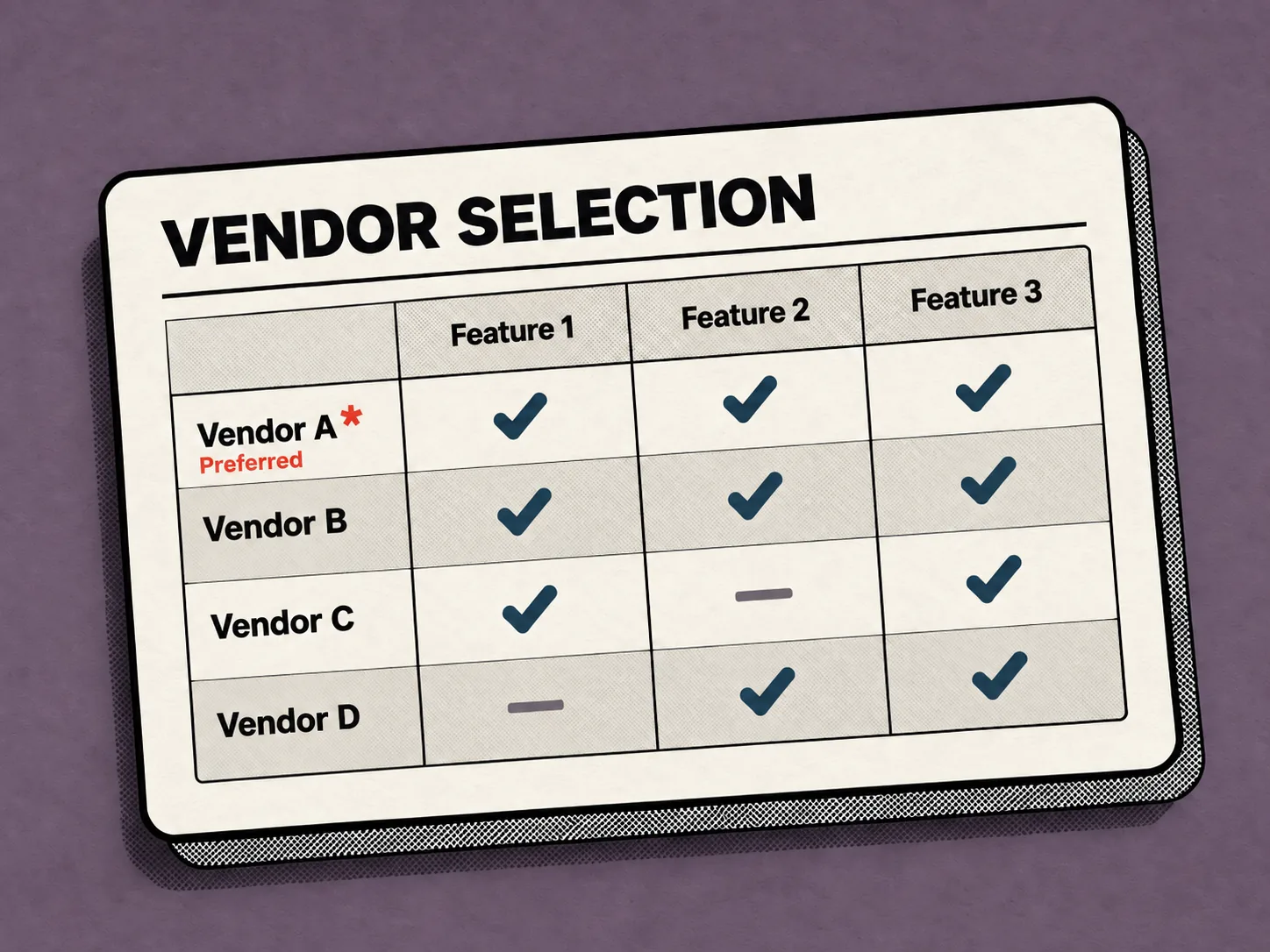 6 min read
B2B buyers lean toward some vendors long before they compare features. Here’s what brand strategy has to do with it.
ReadTell us what you’re working with and we’ll tell you what we’d do.
Book a diagnosis call