
Why having a brand strategy matters in B2B
Most B2B buyers pick from vendors they already had in mind. Brand strategy increases the probability that you’re one of them.
 by Phil Lieng
In tech, the usual view is that a great product sells itself. People still have to try it first, and when there are many similar options, something has to make them pick yours.
AI has made that harder to ignore. It’s now faster and cheaper to build software, so more products look alike. An investor told TechCrunch in March 2026 that an edge built mostly on interface and automation is no longer enough, because AI-native teams can rebuild those products quickly. Some SaaS companies, G2 among them, now put more of their budget into building their brand.
Leading professional services firms, which often sell the same services as their competitors, understood this long ago.
Anthropic is a good example from tech. It built its name on developing AI with safety first, and it stuck to that in February 2026 when it refused to let the Pentagon use Claude for mass domestic surveillance or fully autonomous weapons.
Think about how most people chose their AI assistant. Few ran the same task through five of them and compared the results. They tried the one a peer recommended or the one they kept reading about. Anthropic’s stance on safety is part of what its name means. It probably isn’t why most people sign up, but it’s what many of them know about the company before they type a first prompt. Being the option people lean toward before they compare anything is what a brand does, and B2B buyers rely on it just as much, with more people involved and more at stake.
What is brand strategy?
For many people in tech, a brand is a logo, a visual identity and a design system, but when it’s done well, that’s the visible output of a brand. Behind it is a strategy that works out how people perceive the company and what it offers. The brand itself is the set of ideas and feelings they connect to your company, and what comes to mind when they need what it sells.
Brand strategy is choosing what your company will be known for, whether that’s what your product does better, what you believe or how you show up, usually a mix of the three, and building that memory long before buyers start looking.
B2B buyers choose before they compare
A B2B buyer rarely makes a decision alone, or from scratch. Bain reports that about 9 in 10 buyers end up choosing a vendor from their Day 1 list, the vendors they had in mind before they started looking.
Most of your future buyers aren’t ready to buy anything right now. The Ehrenberg-Bass Institute estimates that only about 5% of B2B buyers are in the market at any given time.
B2B teams tend to assume their buyers make decisions around purchasing software purely based on logic. Research gives gut feel more weight than that. In one large study of B2B buyers, what a purchase did for the buyer personally, like how it made them look to their boss, counted twice as much as what it did for the business. The people around the deal lean the same way: finance, IT and procurement judge a vendor on its reputation and on how safe the choice feels.
Gong leaned into that side of buying. It built a bold, irreverent brand personality that made it stand out from other revenue tools, and from most of SaaS.
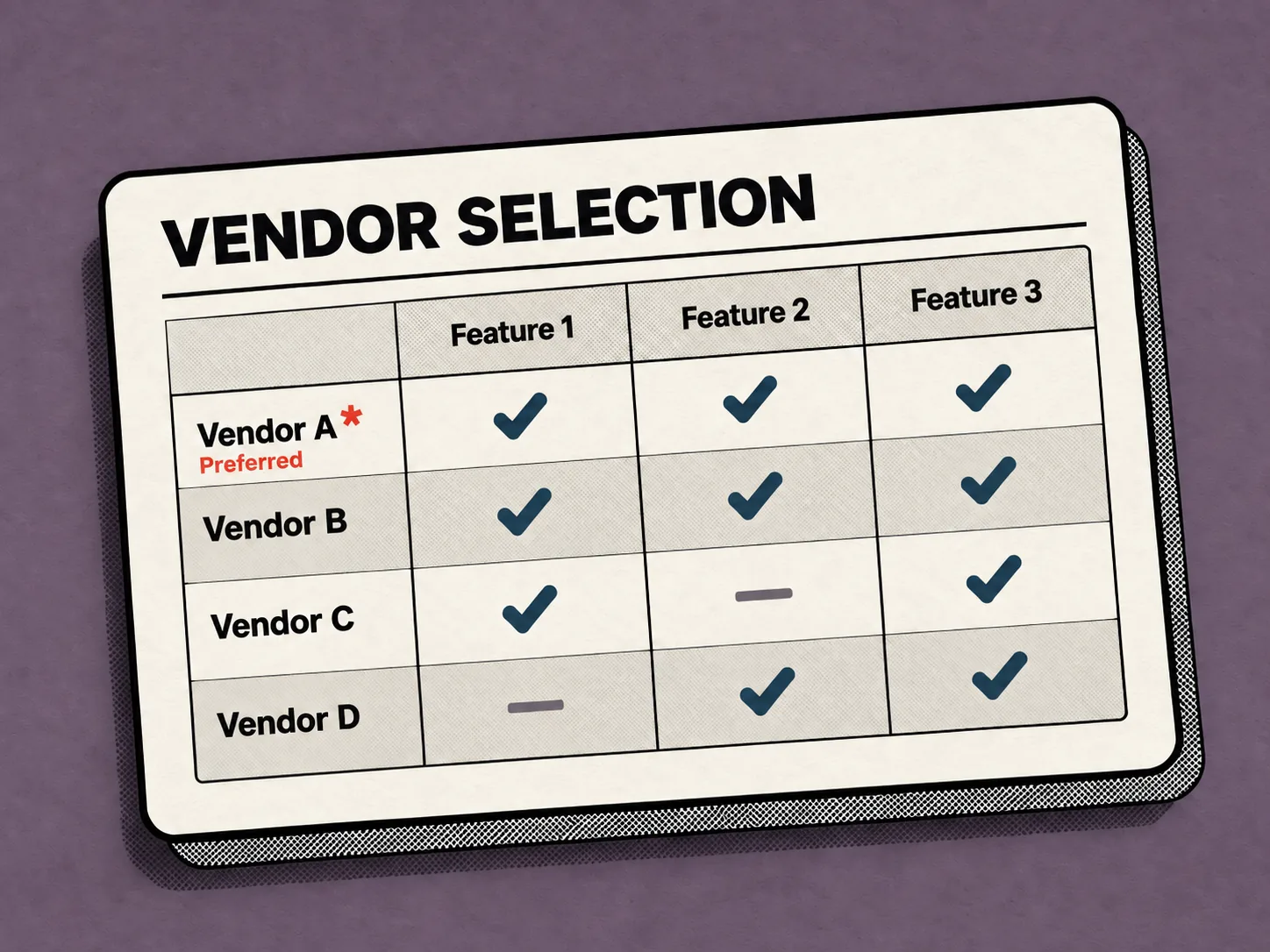
The Day 1 list forms long before anyone builds a decision matrix. Brand strategy makes you more likely to be on it, and more likely to be the vendor buyers prefer once they start comparing.
What a brand does to your numbers
- Price and the multiplier: brand building “reduces price sensitivity and increases margins”, and stronger brands make short-term sales campaigns hit harder (LinkedIn B2B Institute, 2019).
- Preference and win rate: in 84% of B2B deals, the first vendor the buyer contacted was the one that won (6sense, 2023).
- Premium: B2B buyers who see personal value in a purchase are about 8 times more likely to pay a premium (Google, CEB and Motista, 2013).
- Loyalty: customers who prefer a brand stay longer and recommend it, which shows up in LTV and NPS.
- Valuation: companies with stronger B2B brands trade at a 65% premium on forward price-to-earnings ratios (Brand Finance, 2026).
A brand builds credibility over time
Having a deliberate brand strategy builds your credibility over time and makes buyers trust you before they’ve talked to you.
The people around a B2B deal want to hear about you from third parties. Decision-makers say they’re more likely to invite a company to bid when it publishes high-quality thought leadership (86%, Edelman and LinkedIn, 2024). Review sites now rank second among the sources that shape B2B software shortlists, behind AI chatbots (G2, 2026).
None of these wins a deal on its own. Years of them, all saying the same thing about you, are how you end up on the Day 1 list. That’s why B2B branding works more like an asset than a marketing expense: its value builds year after year.
Start by choosing what you’ll be known for
Positioning should come first. It’s a business decision, not something you should delegate to a creative agency.
- Positioning is the decision: what you’re the best choice for, and for whom.
- Brand strategy is how that decision shows up in everything buyers see and hear from you, from your visual identity and tone of voice to your website, content and sales pitch, so they recognize you and remember you.
What buyers remember usually comes from a mix of three things: what the product does, what the company believes and how it shows up.
- Figma became the name people think of for collaborative design. It launched in 2016 as a design tool that runs in the browser and lets a whole team work on the same file at once. It also hosts a community where designers share files and plugins with each other, and its annual conference, Config, has become one of the biggest events in design.
- Clay coined the “GTM engineer” job title in 2023, so the people who take on that job learn it on Clay. It teaches the role through Clay University’s courses and certifications, and its users run local Clay clubs around the world.
- Notion turned its users into its marketing. Its most active users teach others through an ambassador program, many of the most popular templates are made by the community, and its black-and-white illustrations make it recognizable at a glance.
- Shopify stands for the belief that anyone can start a business, and its first brand campaign said it plainly: “Let’s make you a business.” It backs that up twice a year with Shopify Editions, a showcase of new features for the merchants and developers who build on it.
- Anthropic backed its safety stance with its first Super Bowl ads in February 2026, promising that Claude would stay ad-free and poking fun at chatbots that slip sponsored answers into a conversation.
None of these brands is known for just one thing. Their product, their beliefs and the way they show up all point in the same direction, and they’ve kept it up for years. For a smaller company, the lesson isn’t to copy Figma’s conference or Anthropic’s Super Bowl ads. It’s to choose what you want to be known for, pick a few practices that fit it, and stick with them.
Before you brief an agency on your brand identity, make sure you can answer one question: what do you want buyers to think of before they’ve ever talked to you? If you’d like help answering it, that’s where my positioning work usually starts.
Sources
- TechCrunch, “Investors spill what they aren’t looking for anymore in AI SaaS companies” (March 2026)
- G2, “Brand is having a glow-up, and AI is the glam team behind it” (June 2025)
- PPC Land, “Anthropic’s CEO drew two red lines. The Pentagon said no.” (February 2026)
- Bain & Company, “Raising the Odds on a Deal” (June 2026)
- Peter Weinberg and Jon Lombardo, “The 95:5 rule is the new 60:40 rule,” Marketing Week (research by John Dawes, Ehrenberg-Bass Institute)
- Google, CEB and Motista, From Promotion to Emotion (2013)
- Les Binet and Peter Field, The 5 Principles of Growth in B2B Marketing, LinkedIn B2B Institute (2019)
- 6sense, 2023 B2B Buyer Experience Report
- Brand Finance, World’s Most Valuable B2B Brands 2026
- Edelman and LinkedIn, 2024 B2B Thought Leadership Impact Report
- G2, 2026 AI Search Insight Report
 9 min read
A Positioning Guide for AI Products
When anyone can build the product, what sets one apart is the brand around it.
Read